Disclaimer
All screenshots in the article were taken in the Dutch version of Nmbrs Accounting.
The Self-accounting feature is only available in the bundle Small, Medium, Large or Unlimited.
In a domain for which the Self-accounting feature is activated, a user with the 'Management' role can assign the role 'Back office' to a user. This gives a business owner access to the Back office accounting features and thus allows him or her to do the complete accounting themselves including, e.g., making memorial entries, processing purchase and sales invoices and corresponding bank transactions in the administration, etc.
For a detailed description, see article Assign 'Back office' role (self-accounting) to user(s) in your domain.
Permissions and roles
Through the details (settings) of a domain, a user with the 'Portal administrator' role can activate the Self-accounting feature for a domain.
FOR FREQUENTLY ASKED QUESTIONS ABOUT THE SELF-ACCOUNTING FEATURE, SEE FAQ SELF-ACCOUNTING FEATURE (ACCOUNTANT)
The screen to view and/or change domain settings is opened as follows:
- automatically immediately after creating a new domain
- In the accountant portal, click on Management and then click on Domains. Then click on the name of the domain.
- In the accountant portal, click on Management and then click on Domains. Then hover your mouse over the line of the domain in question, click on the button with the three dots, and then select View domain details from the menu..
The following screen is opened:
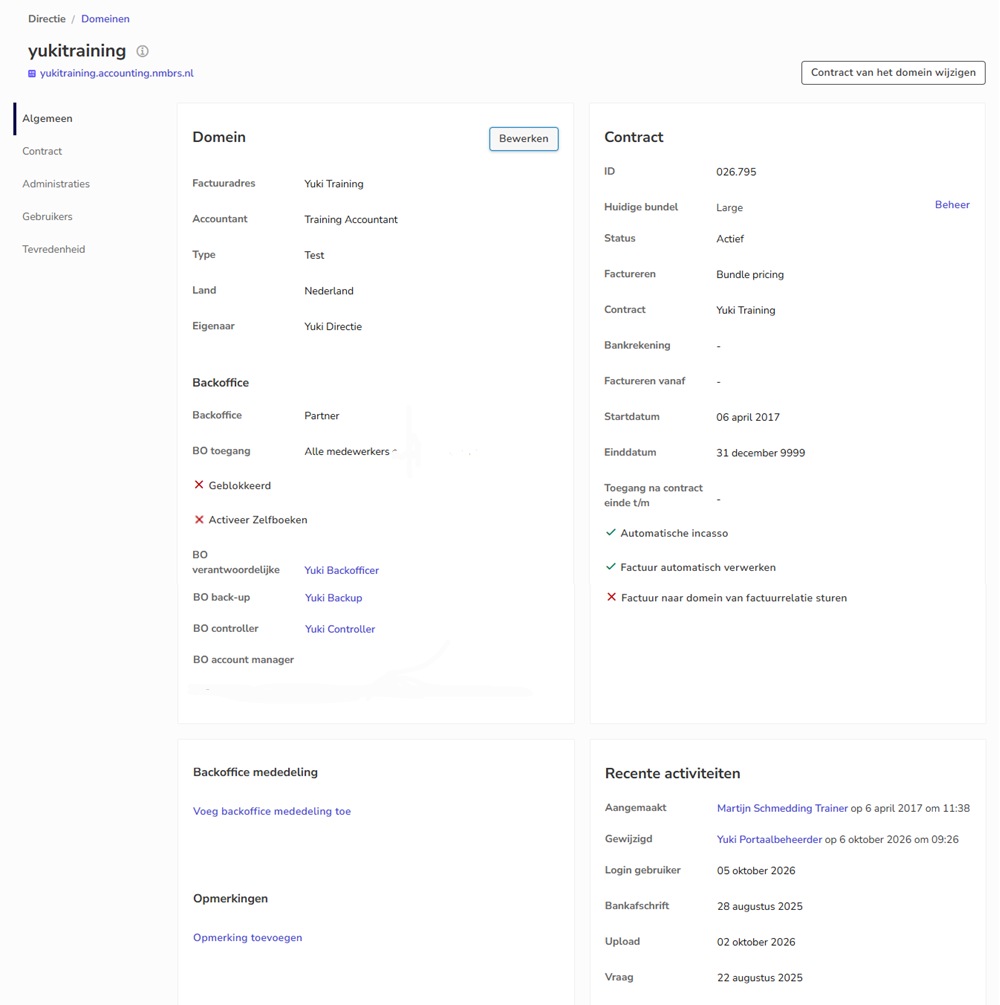
Then, behind Domain, click on the Edit button to activate Self-accounting in the domain. The following screen is opened:
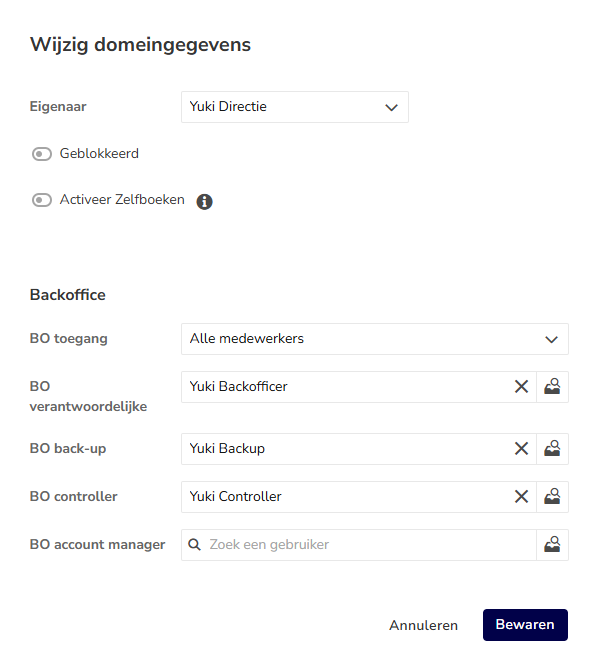
By checking the Activate Self-accounting check box you can activate Self-accounting.
After you have activated Self-accounting for this domain, the workflow of the corresponding domain is excluded from the Back office monitor and overviews by default.
If desired, you can specify behind Workflow whether it should be a “normal” workflow or whether the workflow should be excluded from the Backoffice monitor by selecting Normal or Exclude from Backoffice monitor, respectively.
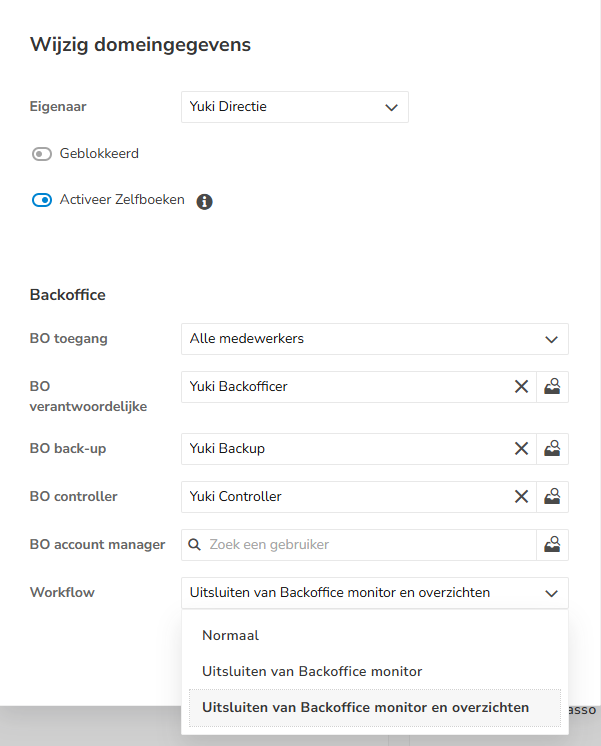
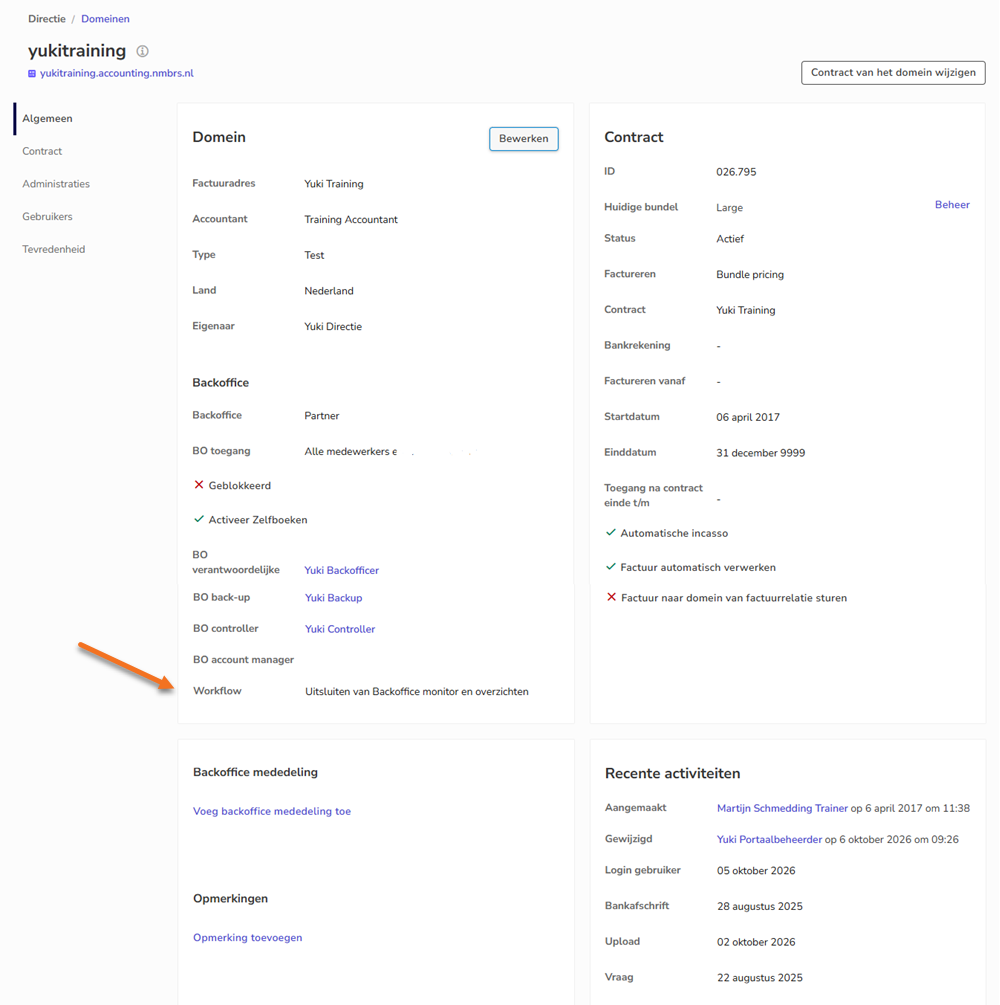
The details of the domain (settings) then shows whether or not the workflow of the domain is excluded from the Back office monitor.
Was this article helpful?
That’s Great!
Thank you for your feedback
Sorry! We couldn't be helpful
Thank you for your feedback
Feedback sent
We appreciate your effort and will try to fix the article